A local boat “Horri” 40 horses speed bullied for fishing. You can take one of or organized tours and be taken to incomparable destinations.
Shouab beach: a half day tour to discover the beauty of Shouab beach. With the clear water and white sands you can snorkel and relax. Whilst driving the boat, dolphins groups can be witness and lopping right next to the boat. Whale and Dolphins spotting safaris:
because of its unique location in the Indian Ocean and Arabian Sea the Island of Socotra is blessed with a very special event: the presence of visiting whales and Dolphins, which has only recently been recognized as another asset to this beautiful holiday destination.
The year 2005 was an extraordinary year with regard to the number of whales and Dolphins spotted in the waters surrounding the island. But after the Tsunami a number not a little of whales and dolphins drifted up and seen dead in the western coastal line where some species took up residence there before.
Just about five kilometers off the shore of Qalansiya, taking anexcursion to the marvelous of Shouab beach, Hundreds of dolphins bevies with the crystal water of Shouab beach and on most of thedays these ocean going creatures are swimming by- right on your boat. And if luck stand by you... you will be rewarded by swimming with the very rare ocean dolphins which is common to see in the water of Socotra.
Fishing activity
is recently new invented tours on the Island. and due to its eco-system and marine reserves, and being deficient in facilities and conveniences there area some necessary restriction to be taken in the consideration however, Socotra known as an ideal place for fishing due to its location in the Indian Ocean and Arabian Sea. Socotra fishes exports to world in these days. The majority of the locals on the island are fishermen. If you are looking for a truly fishing experience...Then you should plan your holiday to Socotra Island, trips can be prearranged to join the local fishing men and go out to the sea and familiarize with there traditions means and equipments use like fishing net. With this prime location is known for an excellent climate on the months of February up to April, with breathtaking sceneries and big sized game fishes of Tuna fish, King fish, Barracuda, Sail fish, etc, youwill feel beauty of nature and mixed with the real adventure.
As the waters surrounding the island of Socotra rapidly drop to depths beyond 1,000 m, excellent fishing grounds can befound already within 30 minutes after leaving the harbor.
Newcomers to this activity will reactive the necessary information as how and when they will get with the fishermen.
Παρασκευή 21 Μαΐου 2010

Πέμπτη 20 Μαΐου 2010
The monsoon winds
The monsoon winds
There are two annual monsoons the south-west monsoon, which kicks up high seas around the island from early June to early October (this moon soon brings occasionally heavy rains in June), has created a physical barrier to access by sea since earliest times.
These intercontinental stratospheric winds blow from Africa towards the Himalaya mountains, bringing the wet to India. But as they pass over Socotra they are caught by the nearly 5000 feet high Hagghier mountains and dragged fiercely down over the northern coast.
The wind blows on the north coast, non-stop, day and night, for three months at approximately 90 kilometers per hour with some gusts at 180 kph, in the area of Hadibo, between Howlaf and Mori.
May delivers a smaller amount of precipitation. The annual rainfall varies between 130 to 170 mm/hour. Even during the calmer months sea landings may still be difficult due to a combination of logistical problems, including the absence of adequate harbor facilities. But since 1999 with the building of a new airstrip (the longest in the Yemen), which is built facing into the monsoon winds, the Boeing planes are now able to land all the year round. So as tourists you can come to Socotra at any time, depending on what you want to experience.
There are two annual monsoons the south-west monsoon, which kicks up high seas around the island from early June to early October (this moon soon brings occasionally heavy rains in June), has created a physical barrier to access by sea since earliest times.
These intercontinental stratospheric winds blow from Africa towards the Himalaya mountains, bringing the wet to India. But as they pass over Socotra they are caught by the nearly 5000 feet high Hagghier mountains and dragged fiercely down over the northern coast.
The wind blows on the north coast, non-stop, day and night, for three months at approximately 90 kilometers per hour with some gusts at 180 kph, in the area of Hadibo, between Howlaf and Mori.
May delivers a smaller amount of precipitation. The annual rainfall varies between 130 to 170 mm/hour. Even during the calmer months sea landings may still be difficult due to a combination of logistical problems, including the absence of adequate harbor facilities. But since 1999 with the building of a new airstrip (the longest in the Yemen), which is built facing into the monsoon winds, the Boeing planes are now able to land all the year round. So as tourists you can come to Socotra at any time, depending on what you want to experience.
Τρίτη 18 Μαΐου 2010

Travel Tips
Eco- friendly travellers to Socotra...
It is important to respect and conserve the natural and environment of each country you visit; within Socotra Island. Nature has granted Socotra with many beautiful elements which need to be preserved so, that the next visitors can enjoy Socotra’s exquisite beauty. There is also an interesting culture on Socotra that should be respected, “remember how you would be treated in you own home country”. We are committed to conserve our island. So only we invite you to share with us this cooperation in this regards. Wherever you go, only take memories and leave foot prints! We have put together a few guidelines and environmental tips for keeping on good terms with locals and nature!
Please:
Heed the advice of your guide at all times.
Don’t import or export any biological material or alien species from or the to Island.
Do not leave or throw any litter.
Don’t drop your cigarette buts any where–dispose of them properly.
Don’t swim in sea or rivers unless your guide recommends it.
Don’t make erratic movements as this will frighten or aggravate the wildlife.
Don’t drive off the roads in game reserves and national parks.
Don’t raise your voice or speak loudly inside cave… whisper!
Don’t feed fishes (this creates dependency).
Don’t touch or damage corals.
Use only dead wood to set up a fire.
Ask permission before taking photographs of locals specially women.
Wear well covered dresses while you are in the town or in the villages or where are local people surrounding you because this offending the locals.
Don’t take shells and pieces of corals.
Children might be asking you for money or sweets, bear in mind that it is not allowed to hand money over children ( by handing money to children you encourage begging) and the dental treatment is not readily available on the Island. We recommend handing out pens, pieces of paper and clothes.
Support local business and community initiatives by buying local items rather than imported good.
Δευτέρα 17 Μαΐου 2010
Socotra Itenerary
Day 1: Hadibo, beach and sunset
Welcome at Socotra airport, on monday or friday morning flight. To have a quick preview of the island, we will visit the Socotra Ecotourism Society visitor information center at the airport. Then we will then go to the hotel in Hadibo to check in.
After lunch in a restaurant in Hadibo, we will visit Deleisha coast, not far from Hadibo: swimming in the sea and also in a freshwater lagoon, sleeping on pristine white sand, taking pictures of the landscape with a beautiful background of mountains. If you want to stay up to the night, you will see a fabulous sunset from Deleisha. Dinner and overnight at hotel in Hadibo.
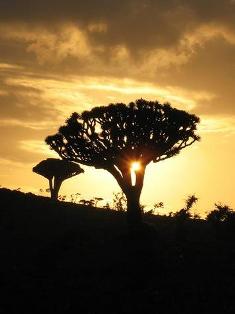
Day 2: Hiking around the Dragon Trees
After breakfast, we will go by 4x4 vehicle to Dixsam plateau and Shebahon viewpoint. Dixsam, located in the mountains in central Socotra, is famous for the endemic Dragon Blood trees. For the Shebahon viewpoint, you will enjoy a fabulous panorama on the Daerhu canyon. Then, we will go down (easy walk) to the wadi (river) and get lunch near the fresh water.Swimming is possible in the freshwater pools. At the end of the afternoon, driving to the camping site in Dixsam.
dragonblood tree
Day 3 Dunes and sea
After breakfast start hiking for 4-5 hour from the camp sit to Hagehar, in the South Coast of Socotra. This itinerary maybe be also made by car. Lunch on the way. Arrive at Amek beach, a beach with blue waters and bright white dunes of sand (on the photo, you can see me in the dunes).
Dinner and overnight camping at Amek beach.
amek socotra
Day 4: Qalansyia/Detwah lagoon
After breakfast we drive from Amek beach to Qalansyia fishing village, very traditional. A few kilometers from Qalansyia, we go to the protected area of Detwah lagoon, probably the most famous landscape of Socotra. Swimming, sleeping under the sun, climbing the dunes, bird-watching...
Dinner and camping overnight in Detwah lagoon.
qalansia socotra
Day 5: Going to Shu’ab beach with dolphins
After breakfast at Detwah lagoon we take a boat ride from Qalansyia to Shu’ab. Many cormamorants and dolphins on the way. We arrive at Shu’ab after a one hour trip and we will have lunch. Free afternoon to swim, enjoy this pristine beach or discovering the near area. In late afternoon we take the boat ride back to Qalansyia. Line fishing may also be possible from the boat, if you want fish for dinner of course.We will then go back to Hadibo for dinner and overnight in hotel. shuab socotra
Day 6: Arher
After having breakfast, we drive by vehicle to Arher beach on the north east coast, which is a meeting point of salty and fresh water, with huge dunes going down from top of mountains, up the turquoise sea. We will enjoy swimming and exploring this site. Fantastic view from the top of the dunes is possible if you are strong enough to climb! Dinner and overnight camping at Arher, near of freshwater river.
arher socotra
Day 7: Dihamri marine protected area
Dihamri marine protected area is the one of the richest coral reefs of the archipelago. This is a good area for snorkeling or diving as well (diving is not included in the price of the trip). But please do not to touch the corals in the marine protected area as this would cause irreversible damage. Back to Hadibo for dinner and overnight at hotel in Hadibo. dihamri socotra
Day 8 : Departure from Socotra
After an early breakfast, we will drope to Socotra airport to take your morning flight to the mainland. If you are lucky, the aircraft pilot will flight over Socotra and you will be able to have an aeral view from the sites you have visited.
Day 1: Hadibo, beach and sunset
Welcome at Socotra airport, on monday or friday morning flight. To have a quick preview of the island, we will visit the Socotra Ecotourism Society visitor information center at the airport. Then we will then go to the hotel in Hadibo to check in.
After lunch in a restaurant in Hadibo, we will visit Deleisha coast, not far from Hadibo: swimming in the sea and also in a freshwater lagoon, sleeping on pristine white sand, taking pictures of the landscape with a beautiful background of mountains. If you want to stay up to the night, you will see a fabulous sunset from Deleisha. Dinner and overnight at hotel in Hadibo.
Day 2: Hiking around the Dragon Trees
After breakfast, we will go by 4x4 vehicle to Dixsam plateau and Shebahon viewpoint. Dixsam, located in the mountains in central Socotra, is famous for the endemic Dragon Blood trees. For the Shebahon viewpoint, you will enjoy a fabulous panorama on the Daerhu canyon. Then, we will go down (easy walk) to the wadi (river) and get lunch near the fresh water.Swimming is possible in the freshwater pools. At the end of the afternoon, driving to the camping site in Dixsam.
dragonblood tree
Day 3 Dunes and sea
After breakfast start hiking for 4-5 hour from the camp sit to Hagehar, in the South Coast of Socotra. This itinerary maybe be also made by car. Lunch on the way. Arrive at Amek beach, a beach with blue waters and bright white dunes of sand (on the photo, you can see me in the dunes).
Dinner and overnight camping at Amek beach.
amek socotra
Day 4: Qalansyia/Detwah lagoon
After breakfast we drive from Amek beach to Qalansyia fishing village, very traditional. A few kilometers from Qalansyia, we go to the protected area of Detwah lagoon, probably the most famous landscape of Socotra. Swimming, sleeping under the sun, climbing the dunes, bird-watching...
Dinner and camping overnight in Detwah lagoon.
qalansia socotra
Day 5: Going to Shu’ab beach with dolphins
After breakfast at Detwah lagoon we take a boat ride from Qalansyia to Shu’ab. Many cormamorants and dolphins on the way. We arrive at Shu’ab after a one hour trip and we will have lunch. Free afternoon to swim, enjoy this pristine beach or discovering the near area. In late afternoon we take the boat ride back to Qalansyia. Line fishing may also be possible from the boat, if you want fish for dinner of course.We will then go back to Hadibo for dinner and overnight in hotel. shuab socotra
Day 6: Arher
After having breakfast, we drive by vehicle to Arher beach on the north east coast, which is a meeting point of salty and fresh water, with huge dunes going down from top of mountains, up the turquoise sea. We will enjoy swimming and exploring this site. Fantastic view from the top of the dunes is possible if you are strong enough to climb! Dinner and overnight camping at Arher, near of freshwater river.
arher socotra
Day 7: Dihamri marine protected area
Dihamri marine protected area is the one of the richest coral reefs of the archipelago. This is a good area for snorkeling or diving as well (diving is not included in the price of the trip). But please do not to touch the corals in the marine protected area as this would cause irreversible damage. Back to Hadibo for dinner and overnight at hotel in Hadibo. dihamri socotra
Day 8 : Departure from Socotra
After an early breakfast, we will drope to Socotra airport to take your morning flight to the mainland. If you are lucky, the aircraft pilot will flight over Socotra and you will be able to have an aeral view from the sites you have visited.
Κυριακή 16 Μαΐου 2010

Socotra Island – Come And Discover
One week (8 Days)
Day 1: Arrive in Socotra
On arrival at Socotra airport, we will visit the Socotra Ecotourism Society visitor information centre at the airport. We will then transfer to the hotel in Hadibo to acclimatise and have lunch. The afternoon activity is a visit to Deleisha coast which consists of pristine white sand, relaxing swimming both in the sea and also in a freshwater lagoon, all with a beautiful mountainous background. There is also the possibility of witnessing a fabulous sunset from Deleisha. Dinner and overnight at hotel in Hadibo.
Day 2: Arher
Early morning we hike down to arher area. We spent the whole day at Arher, which is a meeting point of fresh water from the mountain and salt water from the ocean. Arher is also home to another magnificent sand dune. The remainder of the day is for swimming and exploration of this location. Dinner and overnight camp at Arher.
Day 3: Homhil P.A.
After breakfast we hike to Homhil protected area, wile you are hiking you can enjoy nice sceneries of plants and landscape, once you reach the top of the mountain of the mountain of homhil you can relax to enjoy the north east coast which from the top of the mountain looks marvellous, on your way to homhil you can pass through various Dragons Blood trees, the resin of which is collected, used and traded by the people of Socotra. Frankincense trees are also prevalent here and deserve a close look. Then going to Dihamri marine protected area camp sight for camping and over night at the camp sight.
Day 4: Dihamari
Early morning we drive to Dihamri marine protected area, which is home to one of the richest coral reefs of the archipelago. The many marine animals to be seen whilst swimming/snorkelling include: Parrotfish, Moray eel, Rays, Sea urchins, etc. We would like to remind people not to touch the corals in the marine protected area as this would cause irreversible damage. Dinner and overnight at Dihamri marine protectedarea.
Day 5: Dixsam
After breakfast, we will make our way by 4x4 vehicle to Dixsam plateau and Shebahon viewpoint. This area is renowned for the native Dragon Blood trees, the resin of which is collected, used and traded by the people of Socotra . The area is also home to the endemic and rare Socotra Bunting (estimated at 1,000 pairs). The Shebahon viewpoint gives a fabulous vista overlooking Daerhu canyon where we will see unusual yet beautiful rock formations. We will then make our way down to the wadi in the canyon for lunch and an easy-going walk and maybe also to swim in the freshwater pools in the wadi. Dinner and overnight camp in the wadi.
Day 6: Qalansyia/Detwah
From Dixam we drive early morning to Qalansyia to look around this charming and picturesque fishing town with its traditional houses and narrow alleyways. We then go to the protected area of Detwah lagoon, which is renowned for its spectacular landscape. Sting rays can be seen in the lagoon, so take care when swimming. There is also a large array of sea birds to be seen at this location. Dinner and camping in Qalansia at Detwah lagoon.
Day 7: Shu'ab
After breakfast at Detwah we will take a boat ride to Shu'ab. Be sure to look out for Spinner Dolphins along the way. Cormorants also frequent the area. Once at Shu'ab we will have lunch and the afternoon is free to swim and enjoy this pristine beach setting, complete with mangroves. In late afternoon we take the boat ride back to Qalansyia. Line fishing may also be possible from the boat, if you want fish for dinner of course. Late afternoon back to Hadibu for overnight at hotel.
Day 8: Departure from Socotra
After an early breakfast, we will transfer to Socotra airport to visit the visitor information centre before the short flight to the mainland


Socotra Airport is an airport in Socotra, Yemen (IATA: SCT, ICAO: OYSQ). It is the only commercial airport that serves the Yemeni island of Socotra in the Arabian Sea and its capital town of Hadibo. The most remote Yemeni airport has nearly daily flights connecting the island with the mainland airport near Al Mukalla (Riyan Airport) where all aircraft make a technical stop on their route to the capital city of Sana'a or the southern port city of Aden.
The airport is located on the paved road that connects Hadibo on the northern coast with the main tourist attraction on the extreme west of the island, Qalansiyah beach. It takes about two hours from the airport to get to Qalansiyah, an unpolluted, quiet and romantic beach.
Εγγραφή σε:
Αναρτήσεις (Atom)